

The U.S. healthcare system is entering a new era of transparency. Text that once lived safely inside your systems like payer notices, breach alerts, and trial materials is now going public through APIs, patient apps, and digital disclosures.
The new CMS, FTC, and upcoming FDA diversity rules mean every word you publish in English or another language can be audited, quoted, or shared instantly. If your localization isn’t compliance-grade, you risk confusion, complaints, or even penalties.
Here are three regulatory shifts every healthcare organization should know and how a precise, audited localization process can keep you compliant, credible, and trusted.
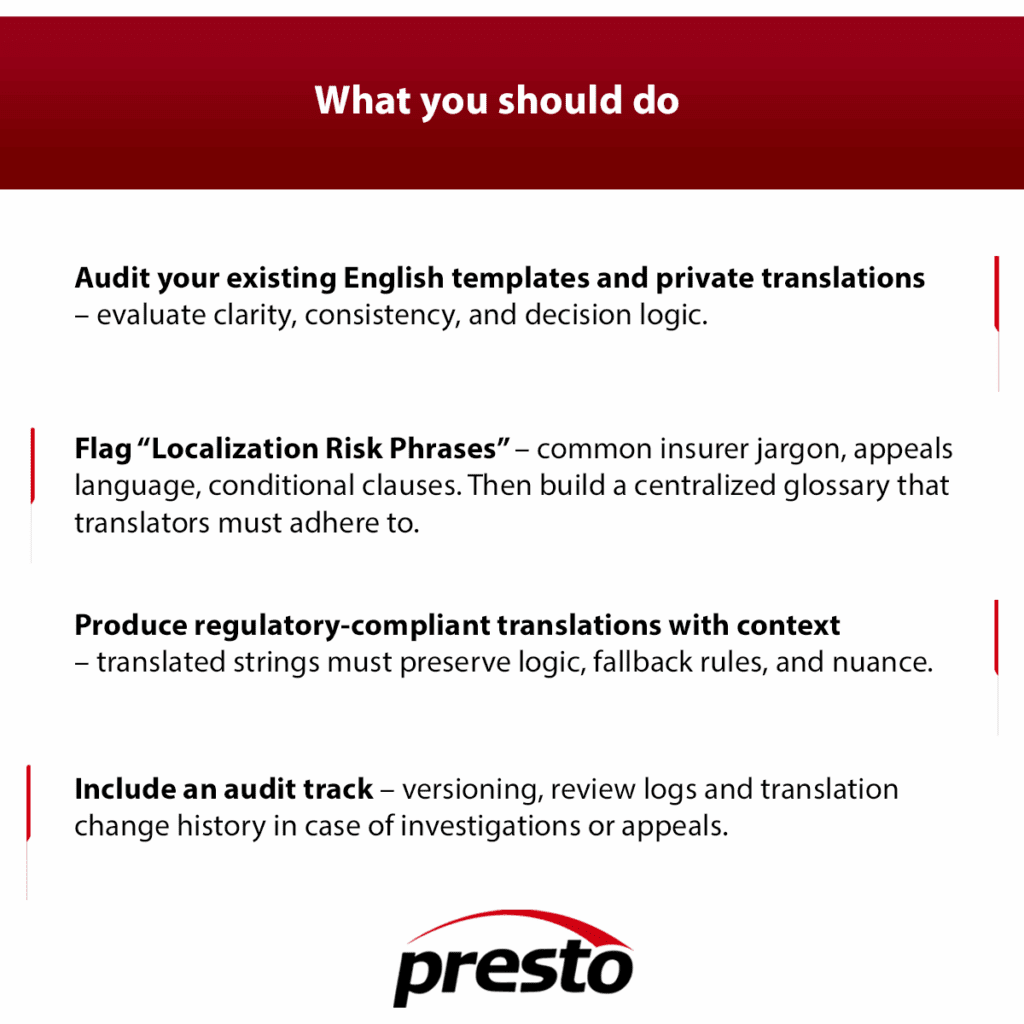
1. CMS Interoperability & Prior Authorization Rule: your patient + denial text will be in APIs
Until recently, most patient and insurance communications stayed inside your systems. The CMS “Advancing Interoperability & Improving Prior Authorization” Rule, effective April 8, 2024, changes that. It makes coverage and denial information accessible through digital APIs and patient apps, meaning your text is no longer hidden.
Some transparency features start rolling out before 2026, while full API requirements extend through 2027. As this information becomes public, clear and consistent language across English and other languages is essential to stay compliant, trusted, and audit-ready.
More about the rule and direct sources:
Under the CMS Interoperability & Prior Authorization Final Rule (CMS-0057-F), payers must make prior authorization and coverage details accessible through patient apps and APIs, meaning your explanations and denial reasons will soon be visible to patients and regulators. From 2026, faster and clearer decisions are mandatory, and every denial must include specific reasoning in plain language. That makes consistent, compliant translations essential for every market you serve.
- That means explanations of coverage, denials, approval conditions, and reasons for requests will be directly retrievable via apps.
- On top of that, by January 1, 2026, payers must deliver decisions within 72 hours for urgent requests, and within 7 calendar days for standard requests.
- Also, notices of denial must include specific reasoning, not vague language.
Why translation/localization is now under the spotlight
- The text in APIs is “live” – users, providers, and third-party apps will see it directly. Mistakes, ambiguity, or inconsistent translation become visible.
- Denial text and coverage criteria will be compared across languages – discrepancies invite complaints, appeals, and regulatory scrutiny.
- Readability matters – even in English, long legal or insurance jargon may fail comprehension thresholds. In translation, the risk multiplies.
2. FTC Health Breach Notification Rule: translated breach notices matter
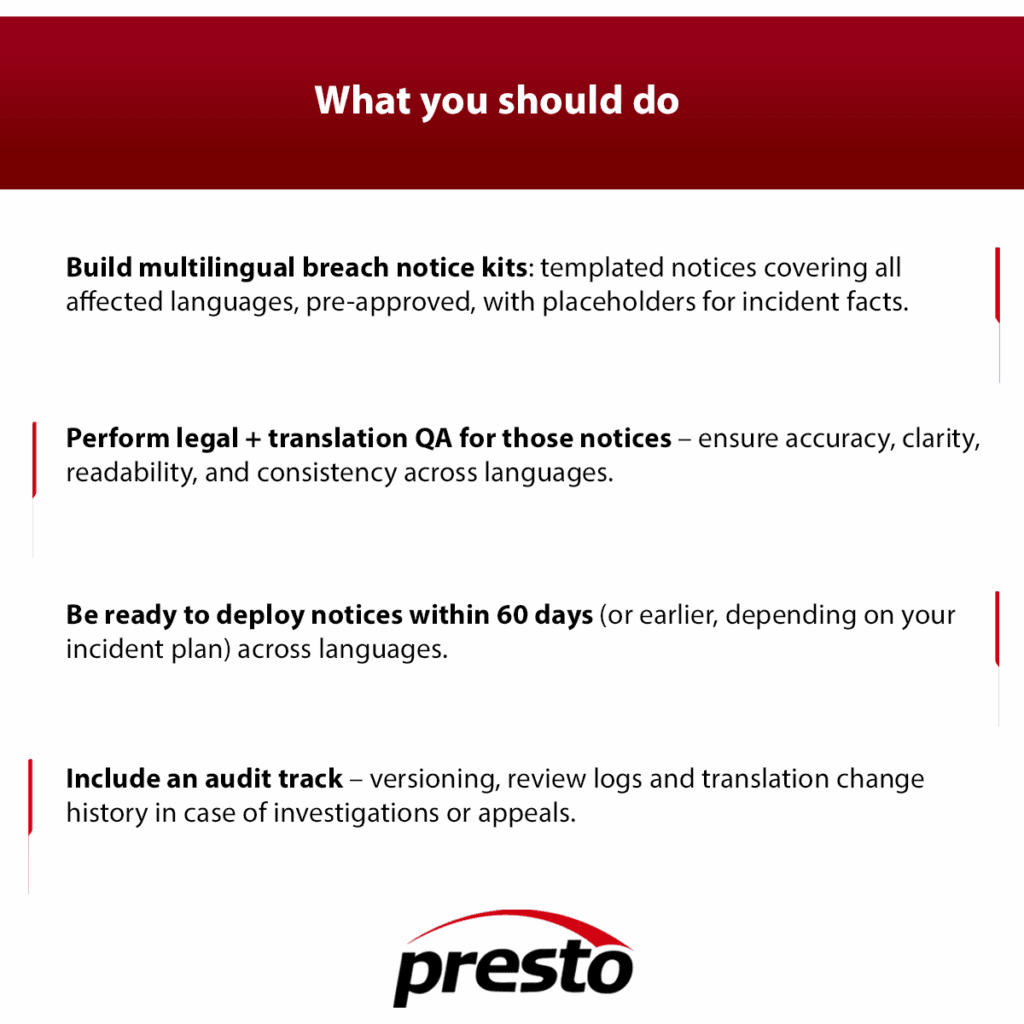
If your health app, wearable, or online platform handles personal health data, the FTC’s updated Health Breach Notification Rule, effective July 29, 2024, now applies to you. It expands the law to cover many digital health tools that were previously outside HIPAA.
When a breach occurs, you must alert affected users quickly and clearly in every language your product supports. One unclear or poorly translated notice can cause panic, complaints, or even legal issues. Professional localization ensures every user receives the same accurate, trustworthy message.
More about the rule and direct sources:
The FTC Health Breach Notification Rule (HBNR) extends to health apps, wellness tools, device platforms, and PHR vendors not covered by HIPAA. When a breach occurs, you must quickly inform users, clearly explaining what happened and how you’re fixing it. For larger incidents, public disclosure is mandatory. Every translation must match the original in accuracy and tone, or it can trigger confusion and compliance risk.
- Amendments effective July 29, 2024, emphasize that non-HIPAA entities collecting health data must notify consumers, the FTC, and (in some cases) the media after a breach of unsecured health information.
- The rule mandates clear, timely notice, including who was affected, what data was exposed, and remediation steps.
- If a breach affects 500+ persons, a public media notice is required.
Why translation matters
- If your platform serves multilingual users, a breach notice in, say, Spanish or Tagalog must be as clear and timely as the English version. Confusion or miscommunication could provoke consumer backlash or enforcement.
- Even covered HIPAA entities often have apps or ancillary tools outside HIPAA’s direct scope. Those may fall under FTC.
- Notice language is tightly regulated: “clear and conspicuous,” “reasonably understandable” – vague or ambiguous translation risks falling short.
3. Clinical Trial Diversity & Multilingual Materials – translation will soon be mandatory
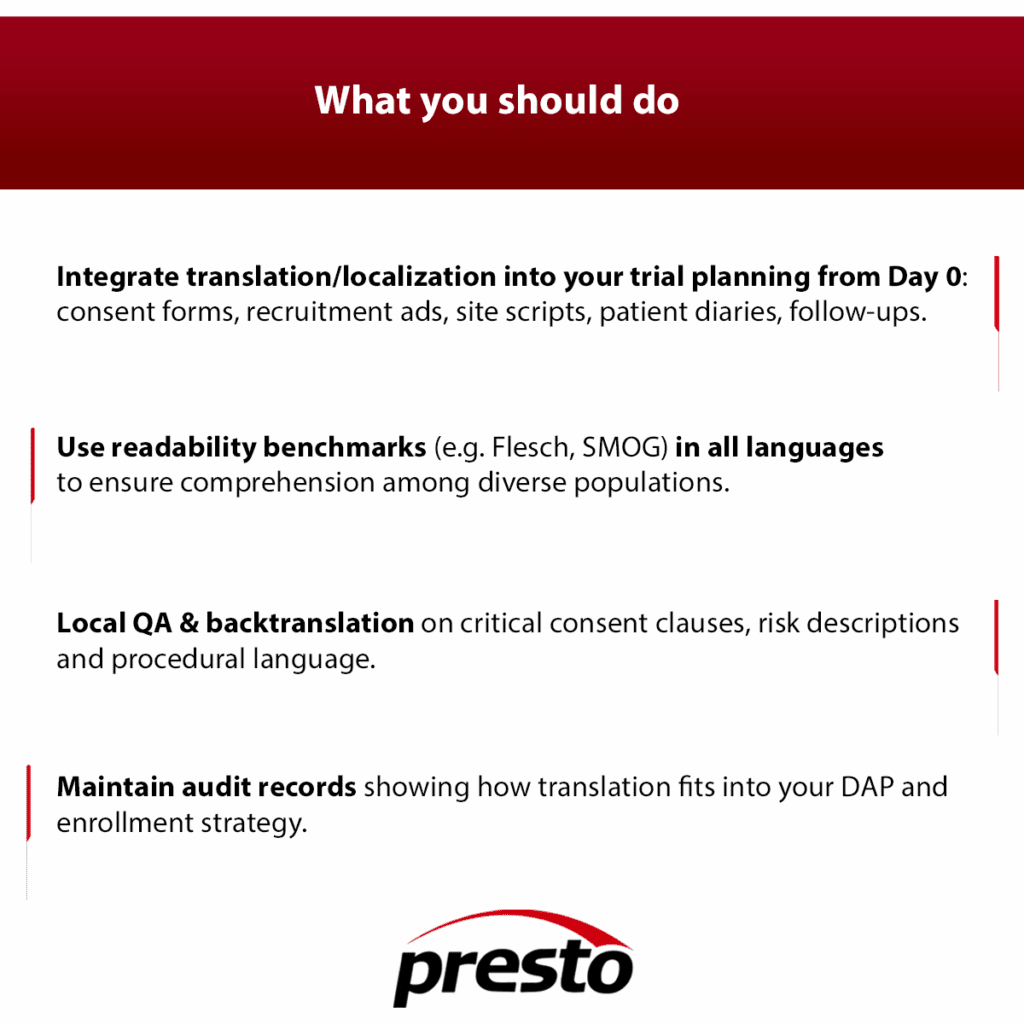
Under new US law (FDORA), sponsors will soon be required to submit Diversity Action Plans (DAPs) for certain late-stage drug and device trials. Once the FDA finalizes guidance, any trial that begins enrolling after a set compliance date must include clear goals and strategies for reaching underrepresented populations. To meet those goals, you’ll need recruitment, consent, and patient materials in multiple languages properly localized from the start.
More about the rule and direct sources:
The upcoming Food and Drug Omnibus Reform Act will require sponsors to show how they plan to reach underrepresented populations.
- Although the FDA’s final guidance isn’t yet published, the rule is effectively in motion – any trial starting enrollment after the final guidance (expected in 2025) will need a DAP.
- Forward-thinking organizations are already localizing recruitment ads, consent forms, and patient materials to engage diverse communities and stay ahead of new compliance standards.
Why translation is part of the mandate
- To reach underrepresented communities, materials must be available in their native languages and dialects, not just English.
- Poor or overly literal translation can alienate audiences or misstate consent risks, hurting recruitment or compliance.
- Local cultural adaptation (e.g. phrasing, idioms, reading levels) increases trust and comprehension, thereby improving enrollment and retention.
Bringing it all together: compliance translation is now the whole infrastructure
Compliance translation is the backbone of your entire communication infrastructure.
Whether it’s API-exposed patient data, public breach notices, or clinical trial outreach, your words are now part of the regulatory record. A single unclear sentence can cause complaints or delay approvals.
The solution: a hybrid, audited localization workflow combining medical linguists, legal reviewers, and context-aware QA. It ensures every translated phrase – on screen, in print, or in consent forms – stands up to both regulators and real patients.
Free 20-Minute U.S. Health Translation Risk Audit
We’ll help you map your exposed communication surfaces: API messages, denial texts, breach notices, and trial materials and pinpoint where compliance and clarity gaps could cost you.
Without any commitment, you’ll get a prioritized action plan within 48 hours, ready to share with your internal teams.